

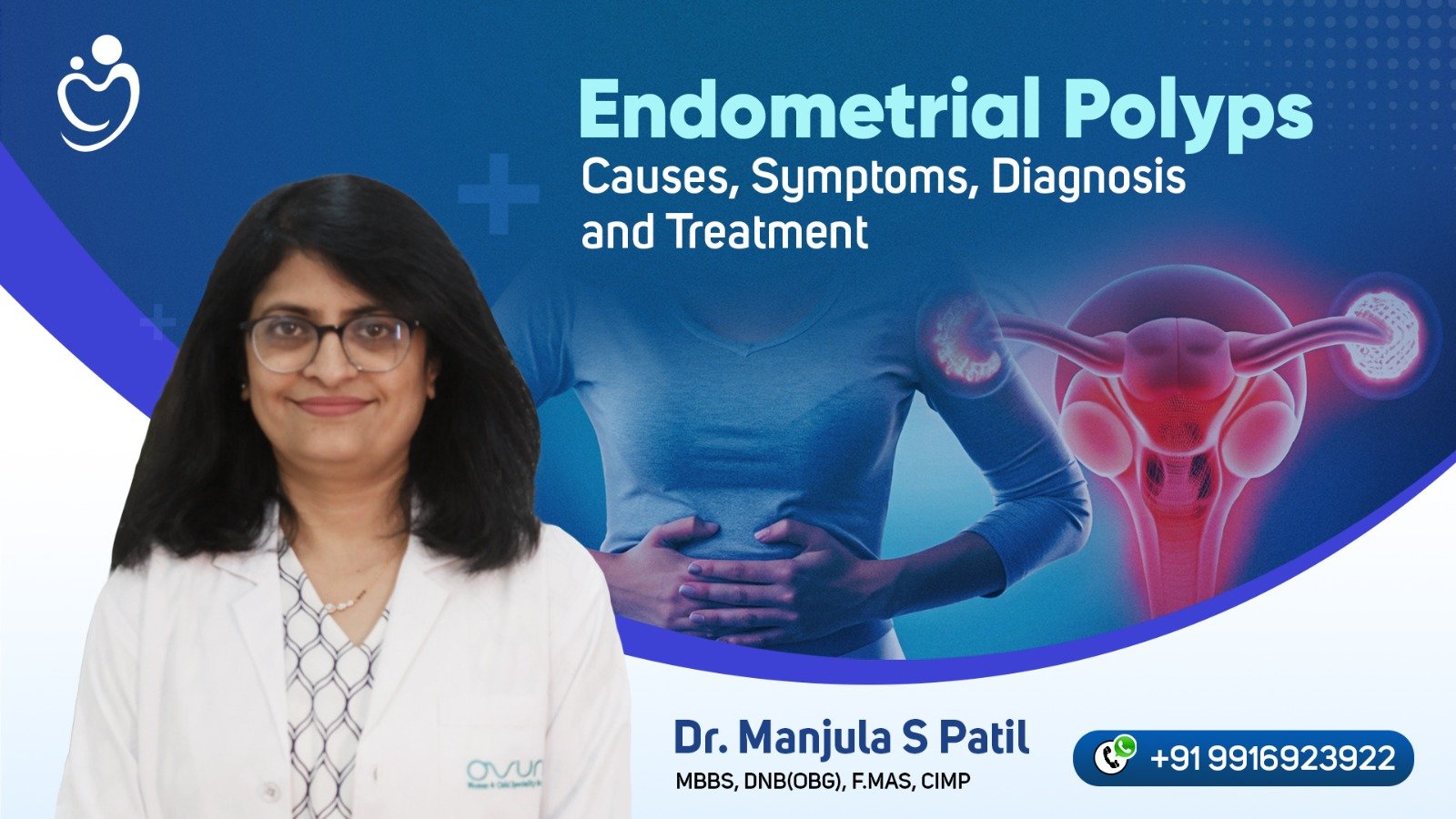
Endometrial polyps are a common gynecological condition affecting women across different age groups. With early diagnosis and timely care from the Best gynecologist, concerns such as abnormal uterine bleeding, infertility, and postmenopausal symptoms can be managed safely and effectively through a patient-focused approach.
What Are Endometrial Polyps?
Endometrial polyps are abnormal growths that develop from the inner lining of the uterus, known as the endometrium. These growths may appear as a single polyp or multiple polyps within the uterine cavity.
Based on their attachment, they are classified as:
- Pedunculated polyps – attached by a thin stalk
- Sessile polyps – attached with a broad base
They are most commonly seen in women between 40 and 50 years of age. Any woman experiencing irregular or abnormal bleeding should consult an Experienced obstetrician for proper evaluation.
Causes of Endometrial Polyps
The precise reason why endometrial polyps develop is still not clearly established. However, they are more commonly associated with hormonal factors, particularly prolonged exposure to estrogen. The use of medications such as tamoxifen may also increase the risk.
A thorough assessment by a Senior gynecologist helps identify underlying risk factors and guides appropriate treatment decisions.
Can Endometrial Polyps Become Cancerous?
Most endometrial polyps are benign. The likelihood of cancerous change is low, with reported rates ranging between 0 and 13 percent.
Regular follow-up with a Women’s health specialist is especially important for women with additional risk factors or postmenopausal bleeding.
Risk Factors for Precancerous or Cancerous Changes
Highest-Risk Group
- Women aged 60 years and above
- Presence of postmenopausal bleeding
- Use of tamoxifen therapy
Intermediate-Risk Group
- Postmenopausal women without symptoms
- Premenopausal women with abnormal uterine bleeding
📌 Important:
The risk of malignancy does not depend on the size of the polyp.
Symptoms of Endometrial Polyps
Some women may not experience any symptoms, and polyps are often detected during routine scans. When symptoms occur, abnormal uterine bleeding is the most common sign and may include:
- Irregular menstrual cycles
- Bleeding between periods
- Heavy menstrual bleeding
Research indicates that endometrial polyps may be present in approximately 20 to 40 percent of women of reproductive age with abnormal uterine bleeding. Other symptoms include postmenopausal bleeding and infertility.
Women experiencing these symptoms should seek care from a Patient-centric gynecologist without delay.
How Are Endometrial Polyps Diagnosed?
Diagnosis typically involves:
- Transvaginal ultrasonography as the first-line investigation
- Saline infusion sonography or 3D ultrasound in selected cases
- Hysteroscopy with biopsy and excision, which is the gold standard
- CT scans and MRI are generally not recommended
Hysteroscopy performed by a specialist trained in Minimally invasive gynecology surgery ensures accurate diagnosis and complete treatment.
Treatment Options for Endometrial Polyps
Expectant Management
Suitable for women without symptoms and low cancer risk. Some polyps may resolve naturally with regular ultrasound monitoring.
Medical Management
Medications have a limited role and are generally not effective as a long-term solution.
Surgical Management
Hysteroscopic removal is the preferred treatment. Benefits include:
- Complete removal of the polyp
- Reduced risk of recurrence
- Tissue availability for histopathological examination
Depending on individual needs, expertise in Laparoscopic gynecological surgery, Vaginal surgery specialist care, or guidance from a Hysterectomy specialist may be recommended.
When Should You See a Specialist?
If you experience abnormal uterine bleeding, infertility, or postmenopausal bleeding, early consultation with a Trusted obstetrician is essential for timely diagnosis and effective management.
Lorem ipsum dolor sit amet, consectetur adipiscing elit. Ut elit tellus, luctus nec ullamcorper mattis, pulvinar dapibus eo.
Dr Manjula S Patil
Consultant Obstetrician & Gynecologist
Dr. Manjula S. Patil is known for her commitment to Compassionate women’s healthcare and Evidence-based gynecology treatment. She focuses on individualized care, clear communication, and ethical medical practice, ensuring every woman feels supported and confident throughout her treatment journey.
📍 Ovum Hospital, Kothanur – Bengaluru
Early care leads to better outcomes. For expert diagnosis and personalized gynecological treatment, consult Dr Manjula S Patil and take a confident step toward better women’s health.
“Expert care, guided by compassion, creates confidence in every woman’s health journey”.